





Air pollution increasing in Kathmandu Valley

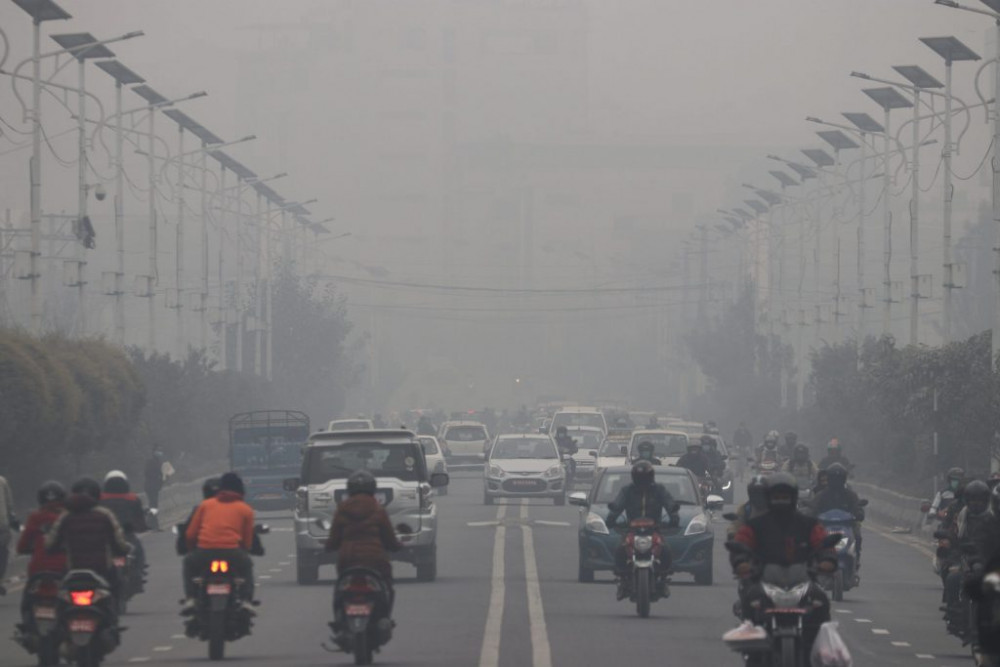
Kathmandu : The level of air pollution in the Kathmandu Valley has increased. The Air Quality Index (AQI), which was 178 until Monday afternoon, has risen to 191 as of this afternoon.

This level is considered unhealthy for everyone, as defined by the US Environmental Protection Agency (US-EPA) standard.
According to the AQI standard, when the index ranges from 151 to 200, everyone may begin to experience health effects, and members of sensitive groups may experience more serious health effects.
With today’s AQI level, the Kathmandu Valley has been listed as the third most polluted city in the world. New Delhi has been categorized as the most polluted city with an AQI of 229, followed by Lahore, Pakistan, with an AQI of 203, placing it second.
According to the Director General of the Department of Environment, Gyan Raj Subedi, the pollution level is likely to increase further if there is no rainfall. The prolonged absence of rain has contributed to the rising pollution levels.
Director General Subedi has advised all concerned stakeholders to follow sustainable and environmentally friendly measures to reduce the impact of increasing air pollution.
Environmental expert Barsha Parajuli said that the rising number of motor vehicles in the Kathmandu Valley, emissions from diesel- and petrol-run vehicles, dust from under-construction roads and infrastructure projects, forest fires, and prolonged drought have led to the escalation of air pollution levels. She warned that if the situation is not brought under control in time, it may become more challenging.
An AQI of 0–50, indicated by green, is considered satisfactory, and air pollution poses little or no risk. Likewise, 51–100, highlighted in yellow, is considered moderate and acceptable; however, there may be moderate health concerns for a very small number of people who are unusually sensitive to air pollution. Active children and adults, and people with respiratory diseases such as asthma, should limit prolonged outdoor exertion.
Similarly, 101–150, highlighted in orange, is considered unhealthy for sensitive groups, who may experience health effects. The general public is less likely to be affected. Active children and adults, and people with respiratory diseases such as asthma, should limit prolonged outdoor exertion.
An AQI of 151–200, indicated in red, is considered unhealthy. Everyone may begin to experience health effects, and members of sensitive groups may experience more serious health effects. Active children and adults, and people with respiratory diseases such as asthma, should avoid prolonged outdoor exertion, while others, especially children, should limit prolonged outdoor exertion, as defined by the standard.
Similarly, 201–300, indicated in purple, is considered very unhealthy. The entire population is more likely to be affected. Active children and adults, and people with respiratory diseases such as asthma, should avoid all outdoor exertion, and others, especially children, should limit outdoor exertion.
An AQI of 300 and above, highlighted in maroon, is considered hazardous. Everyone may experience more serious health effects, and all people should avoid outdoor exertion, According to the Standard.









 विद्यार्थी भर्ना वैशाख १५ गतेबाट सुरु हुने
 इरान युद्धमा सहयोगका लागि नाटोलाई दबाब दिँदै ट्रम्प
 अनरको ‘म्याजिक एट सिरिज’ सार्वजनिक, कति पर्छ मूल्य ?
 जुम्लाबाट एक वर्षमा तीन करोड बढी मूल्यको मार्सी चामल बिक्री
 चार जिल्लामा भारी वर्षा
 अस्थायी युद्धविरामको अमेरिकी प्रस्ताव इरानद्वारा अस्विकार
 प्रति ट्याङ्कर ३० करोडसम्म शुल्क लिएर हर्मुज पार गर्न अनुमती दिँदै इरान
 संयुक्त राष्ट्रसंघमा भिटोमार्फत इरानको पक्षमा उभिए रूस र चीन
 ट्रम्पले चेतावनी दिँदै भने -मंगलबार राति “इरानी सभ्यता समाप्त हुन सक्छ”
प्रतिक्रिया